

Menu

Written by
Vuuh
Product data platform
Share this article



10 march. 2026
How fashion retailers reduce up to 80% of manual product creation work
Automation as the foundation of modern retail across POS and ecommerce
Many fashion retailers find that growth is not limited by demand — but by operations.
This is especially true when it comes to product creation.
Launching new collections in POS systems, webshops — or both — requires significant time and manual effort.
Retailers operating both physical stores and online shops often spend around 50 hours per month on product creation and maintenance.
It is rarely a strategic priority. It is simply necessary work.
Yet it is also an area with major potential for efficiency gains.
The hidden cost of manual product creation
Fashion retailers typically work with many brands. Each brand delivers product data differently:
- Excel sheets
- PDF catalogs
- Supplier portals
- Different image formats
- Inconsistent naming and categorization
The consequences are familiar:
- Duplicate work across POS and ecommerce
- Manual data entry
- Risk of pricing and variant errors
- Inconsistent product data across channels
When products must be created both in-store systems and online, the workload increases significantly.
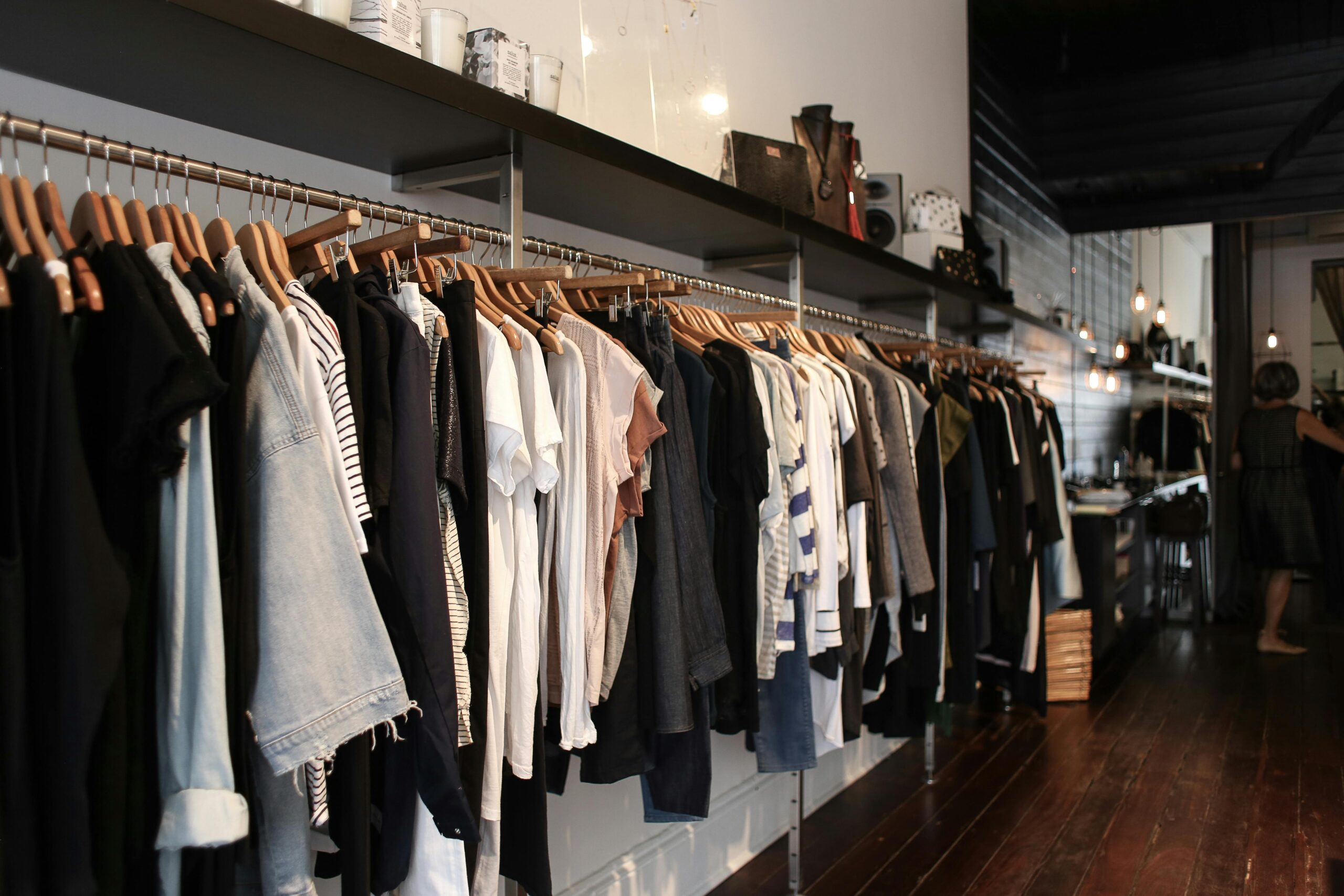
When products are in stock but not yet for sale
A recurring issue is timing.
Many store owners experience that products physically arrive before they are properly created in their systems.
Busy schedules mean products are created when there is time — not when they should be ready.
The result:
- Products sit in storage for days without being available for sale
- Early sales opportunities are lost
- Launch momentum is weakened
To keep up, many retailers publish products quickly but incompletely.
Product descriptions, attributes, and titles are often lacking because there simply isn’t time.
This affects conversion, customer experience, and search visibility.
The priority becomes getting the product live not presenting it optimally.
A structural problem not a resource problem
Manual product creation grows in proportion to assortment size.
- More brands
- More product drops
- More variants
- More sales channels
Growth automatically leads to more administrative work unless the process changes.
The shift from manual creation to data-driven automation
More fashion businesses are now adopting a different approach.
Instead of creating products manually in POS and ecommerce systems, they reuse structured product data and images directly from suppliers.
The process becomes:
- Orders are placed with the brand
- Product data is received in a structured format
- Products are created automatically in POS and/or ecommerce platforms
- Images, descriptions, variants, and pricing are included
- Products are ready for sale — before they physically arrive in-store
Businesses that have implemented this model report up to an 80% reduction in manual product creation work.
It frees up time — without reducing control.

How automation is enabled in practice
Automation requires product data to flow seamlessly between brands, retail systems, and ecommerce platforms.
Vuuh connects supplier product data directly to the systems retailers already use in their daily operations.
Vuuh automates product data flows and product creation across both POS and ecommerce platforms — including collaborations with POS providers such as Customers 1st and ecommerce platforms like Shopify.
This means products only need to be created once — and are then automatically available both in-store and online.
Automation runs in the background and supports existing workflows, allowing retailers to improve operations without changing their system landscape.
Automation also improves data quality
Automation is not only about saving time.
When product data is transferred in a structured way:
- Information becomes more consistent
- Pricing and variant errors are reduced
- Product descriptions improve in quality
- Searchability and filtering are enhanced
Automation also influences buying decisions
An interesting observation among several retailers is that efficient product data handling is beginning to influence brand selection.
If product onboarding is simple and streamlined, the operational barrier to adding new brands is lower.
Automation therefore becomes not only an efficiency tool — but a competitive advantage.
The benefit of connecting POS and ecommerce
In modern retail businesses, physical stores and online shops are closely connected.
When product data is created once and flows correctly between systems:
- Duplicate work is eliminated
- Prices and information remain consistent
- Inventory and sales insights improve
- Reordering and replenishment become easier
Automation is therefore not just a webshop solution or a POS solution — but a holistic operational improvement.
Conclusion
Retail is moving fast.
Assortments change more frequently, and customers expect products to be available across channels.
Businesses that continue relying on manual product creation will face increasing administrative pressure.
Businesses that automate product data flows between brands, POS, and ecommerce systems achieve:
- Faster time-to-market
- Lower operational costs
- Better customer experiences
- A more scalable business
Automation does not remove control — it removes repetition.